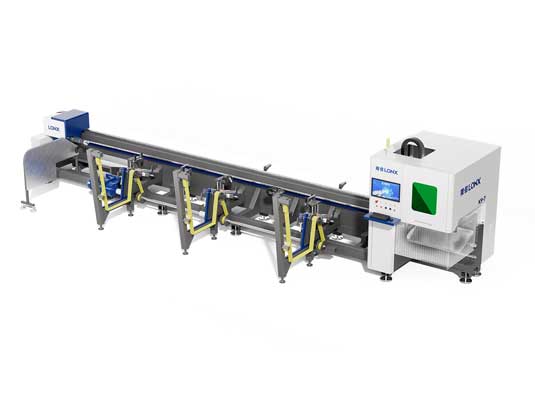
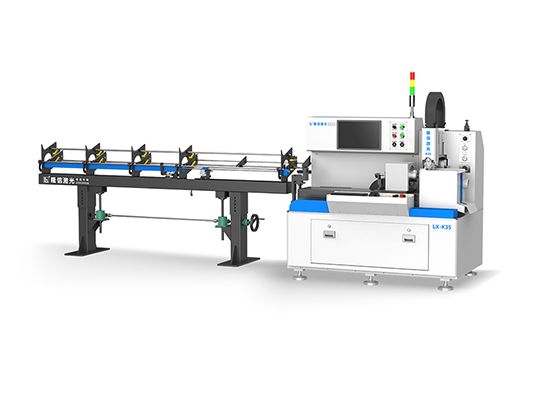
In precision metal fabrication, traditional tube processing has long suffered from fragmented workflows. Fabricators often cut pipes in one station, manually transport them across the workshop, and feed them one by one into a deburring or chamfering station. This traditional model introduces heavy labor costs, operator hazard, dimensional inaccuracies, and production bottlenecks.
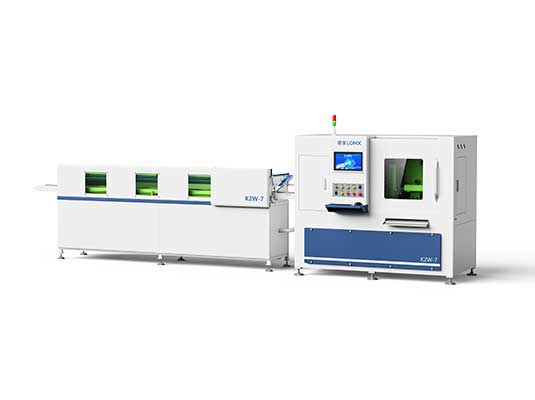
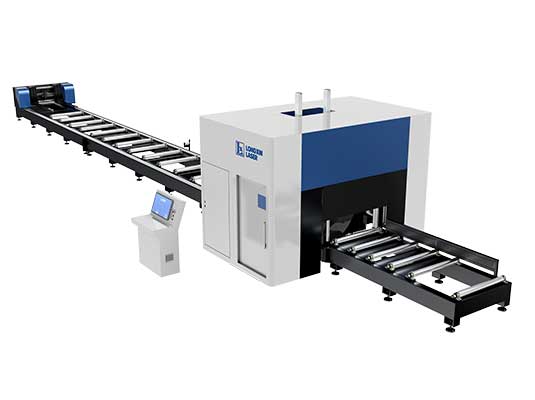
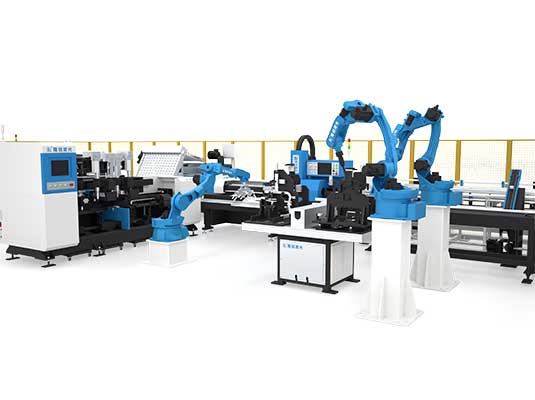
By integrating a CNC laser tube cutting machine with an in-line automatic pipe chamfering machine, modern manufacturers can build a seamless, unmanned automated tube processing line—delivering micron-level cutting precision followed instantly by simultaneous inner/outer chamfering and facing.
While modern fiber laser tube cutters provide clean edge quality and flexible hole/slot profiling, high-precision industrial sectors (such as automotive suspension, fitness equipment, HVAC, hydraulic piping, and furniture manufacturing) demand strict tube-end standards for subsequent robotic welding, mandrel bending, and threaded assembly.
| Processing Stage | Standalone Traditional Setup | Integrated Automated Production Line |
| Material Handling | Manual unloading, stacking, and cart transit | Direct servo-driven automated indexing & transfer |
| End Edge Quality | Inconsistent manual beveling/deburring | Uniform internal & external chamfer + facing |
| Labor Requirement | 2–3 machine operators per shift | 1 technician monitoring the entire line |
| Cycle Speed | Discontinuous batches with downtime | Synchronized, non-stop continuous flow |
| Safety & Scrap Rate | High handling hazard & frequent scratch damage | Contactless laser cutting + enclosed chamfering |
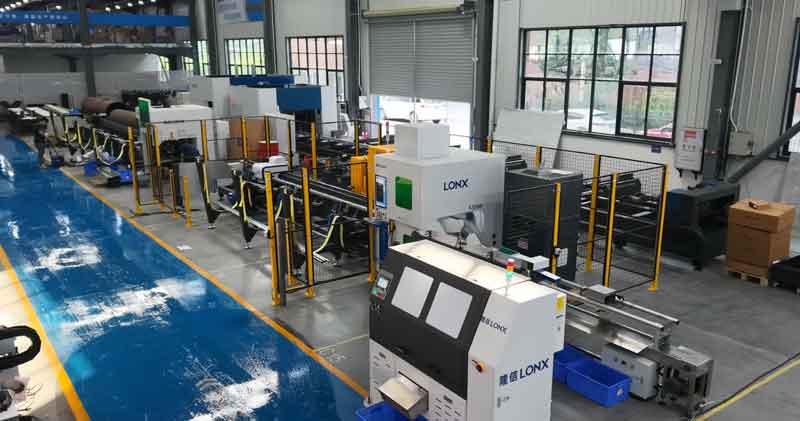
A smart tube processing line operates in a continuous, synchronized sequence designed to eliminate idle transit:
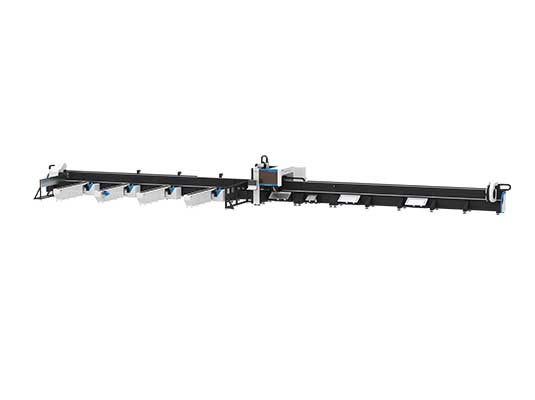
Automatic Bundle Loading: Raw bundles of round, square, or rectangular tubes are loaded onto the automatic feeding magazine, which separates, measures, and aligns one tube at a time.
High-Speed CNC Laser Cutting: The pneumatic chucks clamp the tube, feeding it through the cutting head. Complex cutouts, hole patterns, and cut-off cuts are executed rapidly with minimal kerf waste.
Automated Transfer & Buffer Station: Finished cut pieces do not fall onto the floor. Instead, an automated conveyor or gantry arm receives the tube and buffers it smoothly, matching the cycle time between the laser and the chamfering unit.
Dual-End Pipe Chamfering Machine: The tube is clamped by rigid V-blocks or hydraulic vises. High-precision carbide cutter heads advance simultaneously on both ends, completing inner chamfering, outer chamfering, and face flattening in seconds.
Auto Sorting & Clean Stacking: Finished parts are sorted into dedicated bins, fully ready for robotic welding or direct assembly without manual intervention.
True "Lights-Out" Fabrication Potential: Automated sensors and CNC synchronization allow the line to operate continuously through lunch breaks or overnight shifts with minimal oversight.
Flawless Fit-Up for Robotic Welding: Clean chamfers provide an optimal bevel profile and consistent penetration depth for automated weld cells, drastically reducing weld seam porosity and rework.
Maximized Material & Space Efficiency: By replacing separate sawing machines, manual deburring wheels, and storage pallets between stages, the integrated line cuts shop-floor footprint by over 40%.
Before configuring your automated production cell, evaluate these parameters with your engineering team:
Tube Diameters & Wall Thickness: Match the pipe chamfering machine's tool head capacity to the laser cutter's clamping range (e.g., OD 16 mm–120 mm).
Length Synchronization: Verify minimum cut-off length compatibility between the laser unloader and the chamfering clamp mechanism.
Material Grades: Ensure tool bit coatings (TiAlN/Carbide) are optimized for your alloy profile (carbon steel, stainless steel, aluminum, or copper).