Fiber laser technology has established itself as the global gold standard for industrial metal fabrication. Compared to legacy CO2 lasers, mechanical punch presses, and plasma cutters, fiber lasers deliver unmatched cutting speed, micron-level accuracy, and exceptionally low operating costs.
Understanding the internal physics, optical delivery, and mechanical motion of a CNC fiber laser cutting machine helps manufacturing facilities optimize cut quality, select the right laser power, and maximize workshop throughput.
A fiber laser cutting machine is an advanced CNC machine tool that converts electrical energy into an intense, highly concentrated light beam to slice through sheet metal, pipes, and structural profiles.
The term "fiber laser" originates from its solid-state active gain medium: the laser beam is generated inside an optical glass fiber doped with rare-earth chemical elements (most commonly Ytterbium, Yb), rather than using a gas mixture (such as CO2) or crystal rods (such as Nd:YAG).
Fiber lasers emit light at an infrared wavelength of approximately 1,064 nm (1.064 microns). In comparison, traditional CO2 lasers produce a 10,600 nm (10.6 micron) wavelength.
Because standard engineering metals—including carbon steel, stainless steel, aluminum, brass, and copper—absorb 1,064 nm radiation up to five times more efficiently, fiber lasers achieve drastically higher cutting speeds with significantly lower electrical power consumption.
A fiber laser cutting machine operates through five synchronized technical stages:
The cutting sequence begins inside a sealed solid-state laser source:
Semiconductor Pump Diodes: Banks of electrical pump diodes emit uniform light into the double-clad optical fiber.
Stimulated Emission: Ytterbium ions inside the fiber core absorb this pump energy, exciting electrons to higher energy bands. When dropping back to ground state, they release coherent photons.
Fiber Bragg Gratings (FBG): Integrated microscopic mirrors etched into the fiber core act as an internal optical cavity, reflecting photons back and forth to amplify the light into a high-density, coherent laser beam.
Unlike conventional CO2 systems that require bulky external beam paths, internal mirrors, and helium purge systems:
The generated laser beam travels directly through a flexible, armored fiber optic cable.
The optical beam experiences zero exposure to workshop ambient dust, zero thermal distortion, and requires zero routine mirror realignments over its operational lifespan.
Once the raw laser light reaches the cutting head mounted on the machine gantry:
Collimating Lens: Receives diverging light from the fiber cable and aligns it into parallel beams.
Focusing Lens: Condenses the parallel light into a micro-focal spot, typically between 0.05 mm and 0.15 mm in diameter. This concentration yields immense power density—often exceeding millions of watts per square centimeter.
Capacitive Auto-Focus Sensor: A high-speed non-contact sensor continuously tracks the metal workpiece surface at millisecond intervals, maintaining an exact nozzle stand-off distance (0.5 mm to 1.5 mm) to compensate for warped sheets or uneven tubing.
When the focused laser spot strikes the metal surface, it instantly vaporizes or melts the material. A coaxial stream of pressurized assist gas exits through the cutting nozzle to expel molten slag and protect optical components:
Oxygen (O2): Used primarily for thick carbon steel. Oxygen causes an exothermic oxidation reaction, contributing additional thermal heat that accelerates penetration while blowing molten iron oxide dross downward.
High-Pressure Nitrogen (N2): Used for stainless steel, aluminum alloys, and brass. Operating as an inert shield, nitrogen blows out molten metal without chemical reaction, leaving bright, oxide-free, weld-ready edges.
Clean Compressed Air: A cost-efficient substitute for thin sheet metal, delivering high cutting speeds with minimal operational cost.
The machine's CNC controller reads CAD/CAM nested program files (G-code) and synchronizes AC servo drives across linear axes (X, Y, Z) and rotary axes (such as C-axis chucks on dedicated tube lasers). Moving the cutting head at speeds up to 100+ meters per minute, the machine generates clean cuts, bolt holes, slots, and beveled geometry with repeatable accuracy of ±0.03 mm to ±0.05 mm.
An industrial-grade fiber laser cutter comprises six major integrated subsystems:
| Machine Subsystem | Core Component | Functional Role |
| Laser Generation | Fiber Laser Resonator (1.5 kW – 30 kW+) | Produces the coherent 1,064 nm laser beam |
| Beam Delivery | Armored Fiber Optic Core | Transmits light from source to head without mirrors |
| Cutting Optics | Auto-Focus Laser Cutting Head | Houses protective windows, collimator, and focus optics |
| Motion Gantry | Welded Stress-Relieved Bed & Servo Drives | Delivers high-speed dynamic positioning and stability |
| Cooling Unit | Dual-Circuit Industrial Water Chiller | Regulates temperatures for both laser source and optics |
| Auxiliary Supply | Assist Gas Proportional Valves | Controls high-pressure gas pressure and purity switching |
While both machines share identical fiber laser sources and cutting head principles, their mechanical architecture differs according to workpiece geometry:
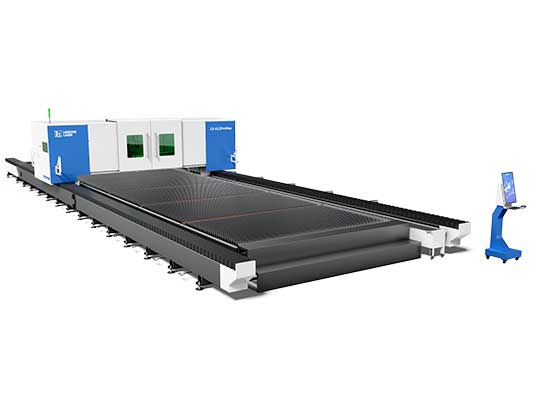
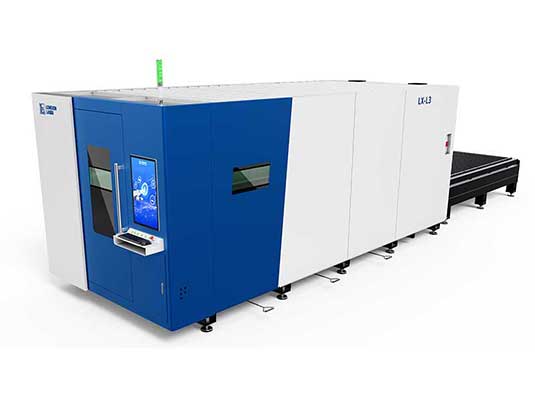
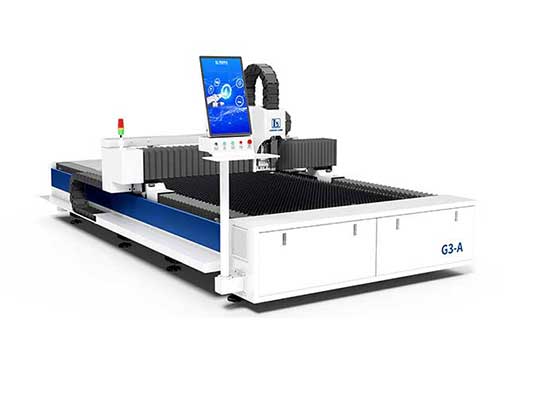
Flat-Sheet Fiber Laser Cutters: Utilize an open or enclosed flat cutting bed (e.g., 3015 or 4020 formats) with exchange pallet shuttle tables. They process flat steel plates, stamped panels, and flat sheet blanks.
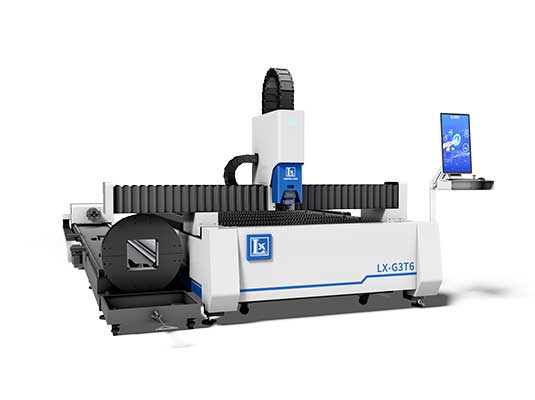
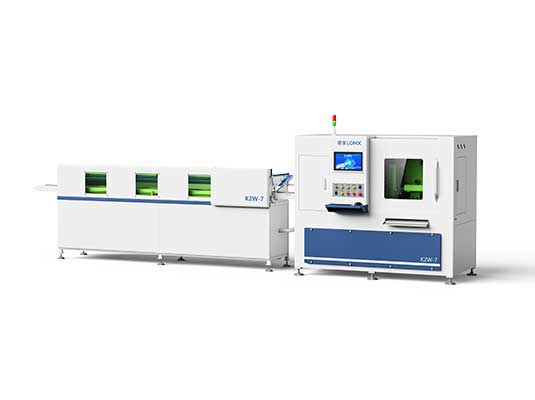
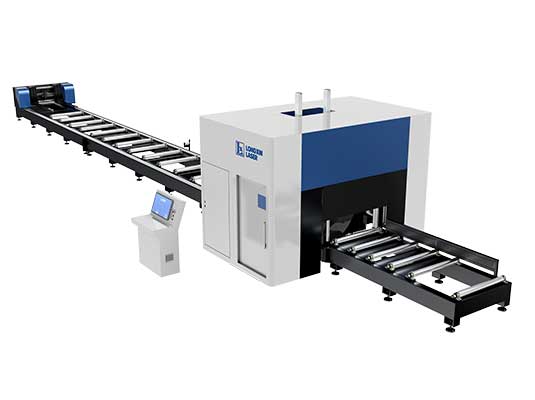
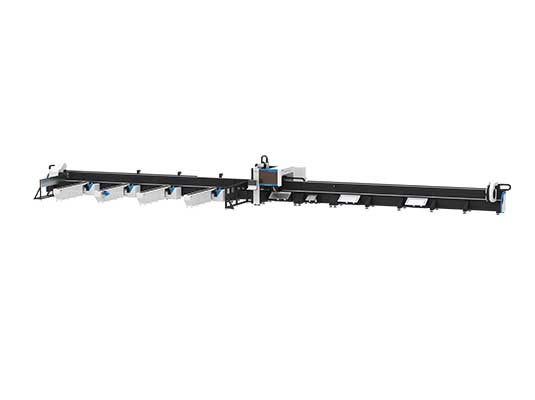
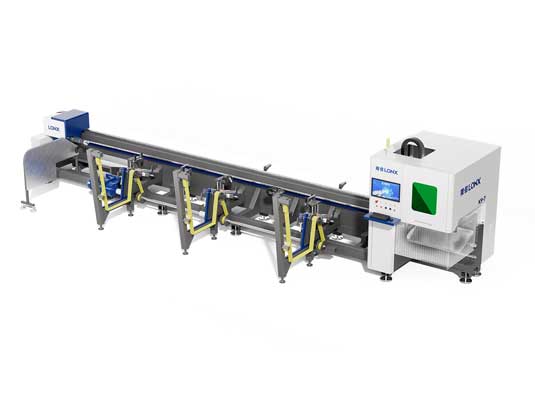
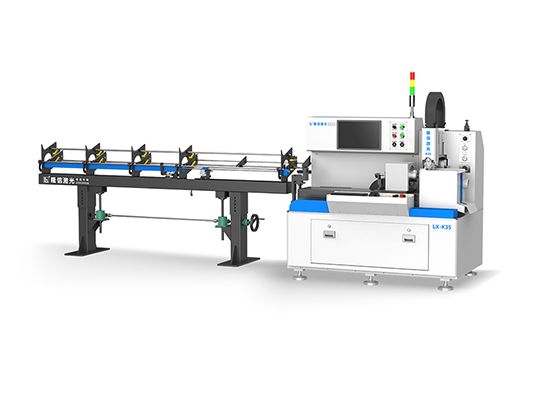
CNC Tube Fiber Laser Cutters: Replace flat beds with high-speed pneumatic/hydraulic rotary chucks and linear feed mechanisms. Tube lasers rotate and cut hollow metal sections, round pipes, square tubing, and open structural steel (channels, angle iron, and beams) with specialized zero-tailing clamping.
Compared to conventional mechanical cutting or legacy thermal processes, fiber laser cutting offers measurable manufacturing advantages:
Superior Energy Efficiency: Fiber lasers achieve electrical-to-optical wall-plug conversion rates of 35% to 45%, compared to roughly 8% to 10% for CO2 systems, significantly lowering utility expenses.
Low Maintenance Overhead: The absence of moving laser mirrors, glass discharge tubes, or internal laser gases virtually eliminates routine optical calibration downtime.
Exceptional Edge Quality: Minimal heat-affected zones (HAZ) prevent heat warping and leave clean, burr-free surfaces, eliminating secondary deburring and edge grinding labor.
Broad Material Compatibility: Readily cuts non-ferrous and highly reflective alloys, including copper, brass, mirror-finish stainless steel, and galvanized metals without back-reflection damage.
Understanding how fiber laser technology works demonstrates why it is the most reliable, precise, and cost-efficient cutting method available for structural fabricators, job shops, and original equipment manufacturers.
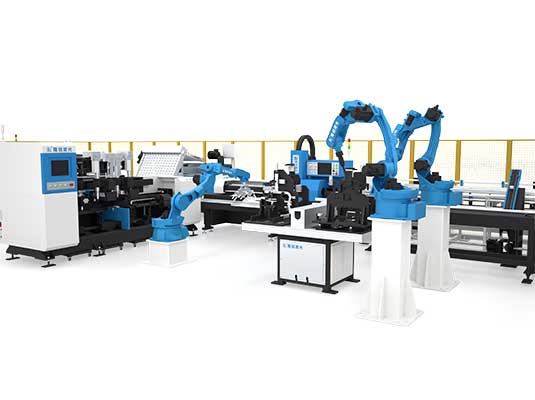
As an experienced manufacturer of industrial CNC fiber laser equipment, we engineer a comprehensive line of sheet cutting tables, specialized multi-chuck tube lasers, and automated bundle-loading solutions tailored to global standards.
Contact Lonxlaser technical sales engineers today to receive detailed machine catalogs, arrange sample cutting tests, or discuss custom machinery configurations for your workshop.