In the modern manufacturing and sheet metal fabrication sector, precision, speed, and cost-efficiency dictate competitive advantage. Over the past decade, traditional mechanical cutting, plasma torches, and legacy CO2 systems have steadily given way to a superior technology: fiber laser cutting.
From precision automotive brackets and architectural stainless steel railings to heavy structural tubing, fiber lasers have established themselves as the industry benchmark for metal processing.
This guide provides a comprehensive breakdown of what fiber laser cutting is, how the underlying technology works, compatible metals, primary industrial advantages, and how to select the right system for your facility.
Fiber laser cutting is an advanced thermal separation process that utilizes a high-intensity, solid-state laser beam focused onto a workpiece to melt, burn, or vaporize metals with extreme accuracy.
The technology earns its name from its active gain medium: the laser light is generated inside an optical glass fiber doped with rare-earth chemical elements (most commonly Ytterbium, Yb), rather than using a gas mixture (such as CO2) or crystal rods (such as Nd:YAG).
The amplified light travels through a flexible armored fiber optic cable directly to the machine's cutting head. When focused down to a fraction of a millimeter, the beam delivers immense power density to create precise, burr-free cuts across flat metal sheets, tubes, and structural steel profiles.
The fiber laser cutting process combines solid-state physics, optical delivery, and multi-axis CNC motion control across five distinct stages:
The process starts within a sealed laser source:
Banks of semiconductor pump diodes emit light into an optical fiber doped with Ytterbium ions.
The ions absorb the pump energy and release coherent photons through stimulated emission.
Fiber Bragg Gratings (FBG) etched directly inside the fiber act as internal cavity mirrors, reflecting and amplifying the photons into a unified, high-density beam.
Fiber lasers produce light at an infrared wavelength of roughly 1,064 nm (1.064 microns), which is approximately one-tenth the wavelength of a traditional CO2 laser (10,600 nm).
Because industrial metals—such as carbon steel, stainless steel, brass, and aluminum—absorb 1,064 nm radiation much more readily, fiber lasers cut thin-to-medium gauge metals up to three to five times faster than legacy CO2 machines while consuming substantially less electricity.
Unlike older lasers that require external alignment mirrors and gas purge ducts that are vulnerable to dust and thermal shifts, the fiber laser beam remains entirely contained within a sealed, armored fiber optic cable. Inside the cutting head:
A collimating lens aligns diverging light into parallel rays.
A focusing lens condenses those rays into a microscopic focal spot (typically 0.05 mm to 0.15 mm wide).
A high-speed capacitive height sensor maintains an exact nozzle-to-workpiece standoff distance (0.5 mm to 1.5 mm), automatically adjusting for surface irregularities.
When the high-density focal spot contacts the metal surface, it instantly heats the material past its melting or vaporization point. A high-pressure assist gas stream exits coaxially through the cutting nozzle to clear the kerf:
High-Pressure Nitrogen (N2): Acts as an inert shielding gas that blows molten material away without chemical reaction, leaving clean, oxide-free, weld-ready edges on stainless steel, aluminum, and brass.
Oxygen (O2): Used primarily on thick carbon steel to induce an exothermic oxidation reaction, adding heat that accelerates deep penetration and blows iron oxide slag downward.
Clean Compressed Air: An economical option for cutting thin carbon and galvanized steel, combining nitrogen's cooling with mild oxidative energy.
A computerized numerical control (CNC) system directs the cutting head along programmed vector coordinates (G-code) via high-speed servo motors and precision rack-and-pinion drives, achieving repeatability tolerances within ±0.03 mm.
Fiber laser cutting machines are engineered primarily for non-ferrous and ferrous metals:
| Material Type | Common Alloys / Grades | Key Cutting Characteristics |
| Carbon & Mild Steel | Q235, A36, 1018, S235, S355 | Fast cutting with oxygen assist; smooth edge finish with high-pressure air |
| Stainless Steel | 304, 316L, 430, Duplex | Nitrogen assist delivers bright, burr-free edges without secondary grinding |
| Aluminum Alloys | 5052, 6061, 7075 | Highly reflective; readily processed by fiber lasers without back-reflection damage |
| Brass & Copper | Yellow Brass, C110 Copper | Traditional CO2 lasers struggle with these, but fiber wavelengths cut them cleanly |
| Galvanized Steel | Hot-dipped, Electro-galvanized | Air or nitrogen cutting prevents zinc coating burn-off along the cut line |
Note: While fiber lasers excel at metal processing, non-metallic materials such as wood, thick acrylics, and leather are better suited to CO2 laser wavelengths.
Investing in industrial fiber laser equipment delivers major manufacturing benefits compared to mechanical saws, punch presses, and plasma tables:
Micron-Level Precision: Exceptional cutting tolerances (±0.03 mm to ±0.05 mm) eliminate downstream fit-up errors.
Zero Tool Wear: Because light does the cutting, there are no mechanical blades to dull, punch dies to sharpen, or costly re-tooling downtime between production runs.
Minimal Heat-Affected Zone (HAZ): Due to the concentrated beam spot, thermal distortion and part warping are virtually non-existent, even on delicate, thin-gauge sheet metal.
Energy Efficiency: Solid-state fiber lasers operate at electrical wall-plug efficiencies of 35% to 45%, compared to roughly 8% to 10% for CO2 lasers, significantly reducing monthly utility bills.
High Processing Flexibility: Operators can switch from cutting intricate sheet metal bracket patterns to round and square tubing simply by loading a new digital CAD/CAM nesting file.
Fiber laser cutting technology serves almost every corner of global industrial manufacturing:
Structural Steel & Construction: Truss connection plates, architectural brackets, and pre-cut I-beams.
Automotive & Transportation: Chassis components, exhaust manifolds, tubular roll cages, and electric vehicle battery enclosures.
Fitness Equipment: Interlocking square tubes, slotted pin-adjustment columns, and welded frame joints.
Agricultural & Heavy Machinery: Tractor cabins, boom assemblies, combine harvester chassis, and implement brackets.
Electrical Enclosures & Cabinets: Power distribution boxes, server racks, and HVAC ventilation ducting.
When evaluating a fiber laser cutting machine for your workshop, align your purchase with three primary operational factors:
Workpiece Geometry (Sheet vs. Tube):
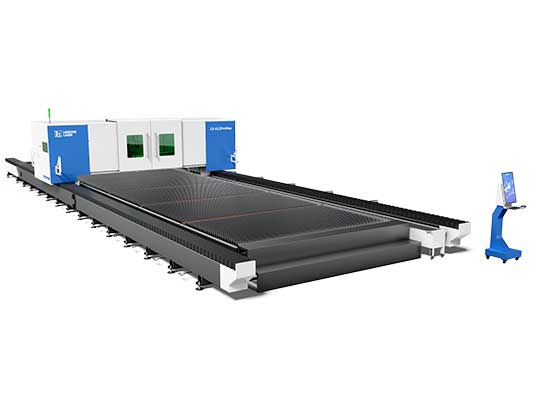
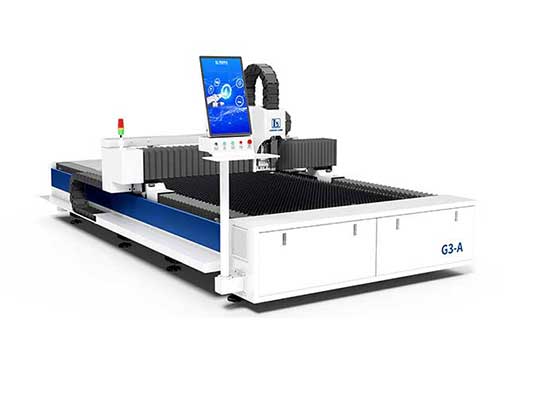
Flatbed Fiber Lasers: Standard 3015 (3x1.5m) or 4020 (4x2m) tables, frequently equipped with automatic shuttle pallet changers for continuous plate cutting.
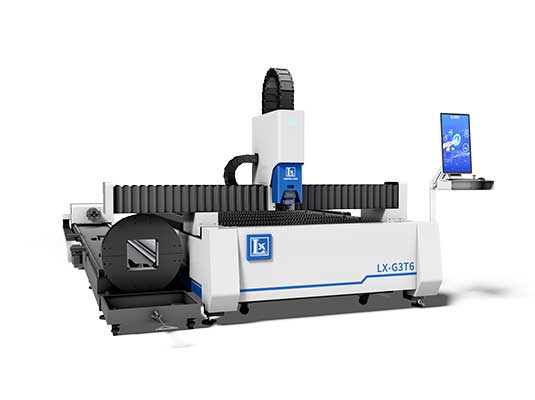
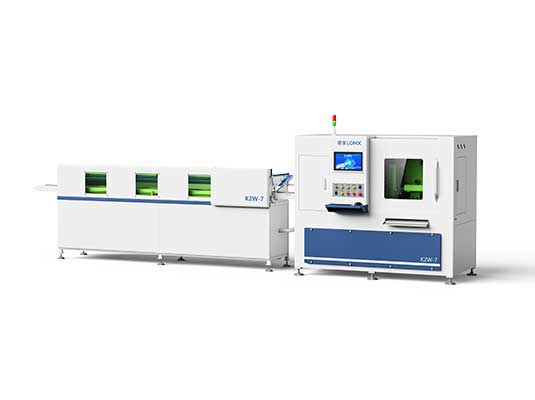
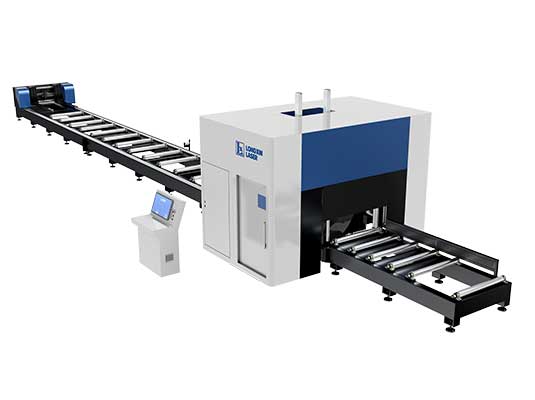
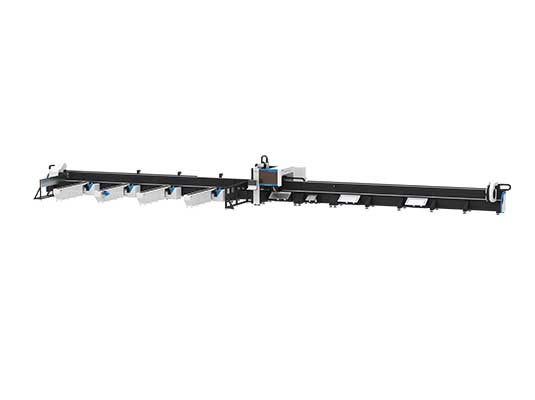
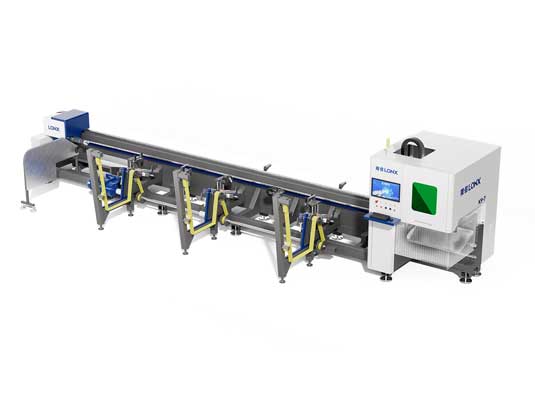
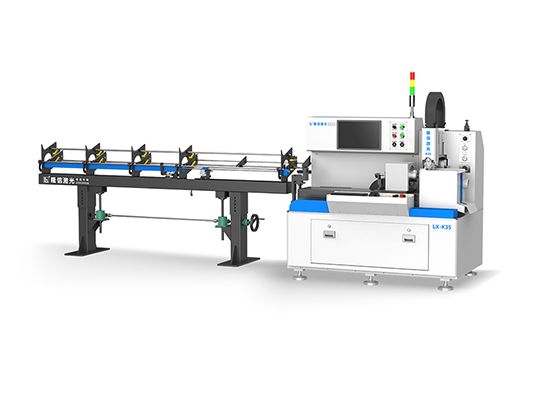
CNC Tube Lasers: Dedicated rotary chuck machines designed to clamp, rotate, and cut round tubes, square boxes, and open structural profiles (Angle, Channel, Beam) with zero-tailing waste.
Laser Power Selection:
1.5 kW to 3 kW: Optimum speed and lowest capital investment for metal thicknesses up to 6 mm.
4 kW to 6 kW: The production sweet spot for medium-heavy fabricators handling plate and wall thicknesses up to 12 mm.
12 kW to 20 kW+: High-speed production piercing for heavy carbon steel (16 mm to 50 mm) and thick structural tubing.
Machine Frame Rigidity & Gantry:
Select a heavy-duty, stress-relieved welded steel plate bed. High-speed accelerations (1.0G to 1.5G) require rigid vibration damping to maintain cutting precision over years of high-volume operation.
Fiber laser cutting technology empowers manufacturers to eliminate outsourcing bottlenecks, cut production lead times, and expand their component processing capabilities.
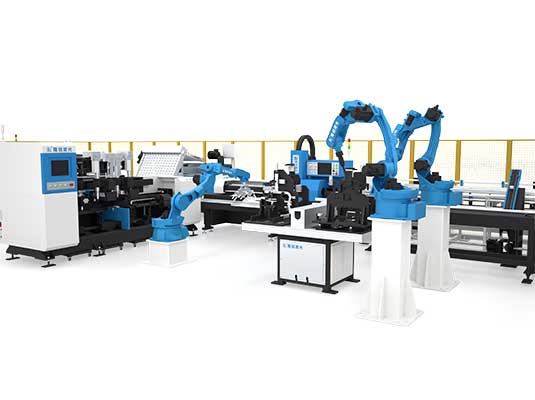
As a dedicated manufacturer of industrial CNC fiber laser cutting systems, we supply precision flat-sheet cutters, specialized multi-chuck tube laser machines, and automated production cells directly from our factory floor.
Contact our engineering team today to discuss your workpiece dimensions, request custom sample test cuts, or receive a tailored machine layout and quotation.