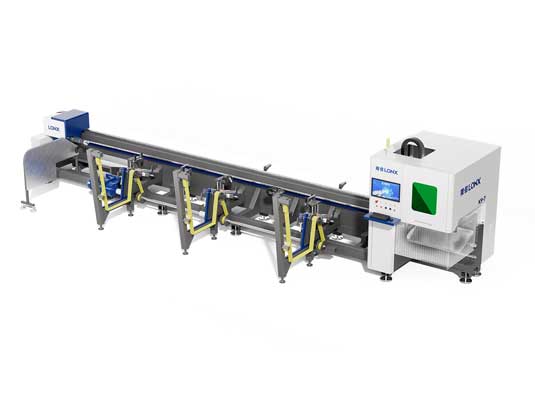
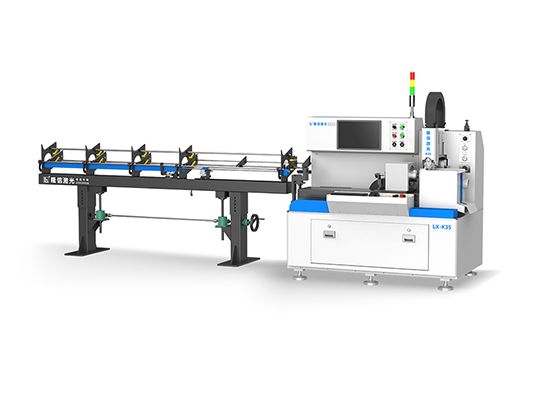
In the modern metal fabrication and precision engineering sectors, traditional mechanical punching, bandsawing, and plasma cutting have steadily been replaced by a faster, cleaner, and far more accurate technology: the CNC fibre laser cutting machine.
From automotive chassis components and architectural metalwork to precision tubular furniture, fibre lasers are recognized worldwide as the gold standard for industrial metal processing.
Whether you are looking to upgrade your workshop capabilities or evaluating equipment investments, this comprehensive guide explains what a fibre laser cutting machine is, how the technology operates, key machine configurations, compatible materials, and how to select the right system for your factory.
A fibre laser cutting machine is an advanced CNC (Computer Numerical Control) machine tool that utilizes an intense, highly concentrated solid-state laser beam to cut, slot, pierce, and bevel metals with microscopic precision.
The defining characteristic of this technology is its active gain medium: the laser light is generated inside an optical glass fibre doped with rare-earth chemical elements (most commonly Ytterbium, Yb), rather than using a gas mixture (such as CO2) or crystal rods (such as Nd:YAG).
The generated light travels through a flexible, sealed, armored fibre optic cable directly into the machine’s cutting head. When focused down to a fraction of a millimetre, the beam produces immense thermal energy density that melts or vaporizes metal instantly, while high-pressure assist gas expels molten slag to leave a clean, burr-free edge.
A modern CNC fibre laser cutter integrates laser physics, precision optics, and multi-axis motion control across five distinct stages:
The process begins inside a hermetically sealed laser source:
Semiconductor pump diodes emit light into the double-clad optical fibre doped with Ytterbium ions.
The ions absorb the pump light and emit coherent photons via stimulated emission.
Fibre Bragg Gratings (FBG) etched directly inside the fibre core act as internal cavity mirrors, bouncing and amplifying photons into a unified, high-density laser beam.
Fibre lasers emit light at an infrared wavelength of approximately 1,064 nm (1.064 microns), roughly one-tenth the wavelength of a traditional CO2 laser (10,600 nm).
Because industrial metals—such as carbon steel, stainless steel, aluminum, brass, and copper—absorb 1,064 nm radiation up to five times more efficiently, fibre lasers cut thin-to-medium gauge metals at speeds three to five times faster than legacy CO2 machines while consuming substantially less electrical power.
Unlike conventional CO2 systems that require bulky external beam tubes, internal reflective mirrors, and constant realignment:
The fibre laser beam is entirely contained within a flexible, armored fibre optic cable.
The optical path experiences zero exposure to workshop ambient dust, zero thermal beam drift, and requires zero routine mirror calibration over its operational lifespan.
Inside the cutting head mounted on the CNC gantry:
Collimating Lens: Aligns diverging light from the fibre cable into parallel rays.
Focusing Lens: Compresses parallel rays into a microscopic focal spot (typically 0.05 mm to 0.15 mm in diameter).
Capacitive Height Sensor: Continuously monitors the gap between the copper nozzle tip and the metal surface in real time, automatically compensating for surface waviness or warped workpieces to maintain optimal focal position.
As the focused beam pierces the metal, assist gas is injected coaxially through the cutting nozzle:
High-Pressure Nitrogen (N2): An inert shielding gas used for stainless steel, aluminum, and brass. It blows molten metal away without chemical reaction, leaving bright, oxide-free, weld-ready edges.
Oxygen (O2): Used for thick carbon steel. Oxygen creates an exothermic reaction that adds thermal energy to accelerate cutting while expelling iron oxide slag downward.
Clean Compressed Air: A cost-effective alternative for thin carbon steel and galvanized metals.
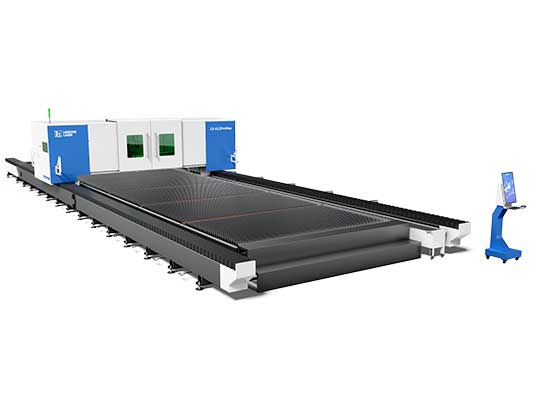
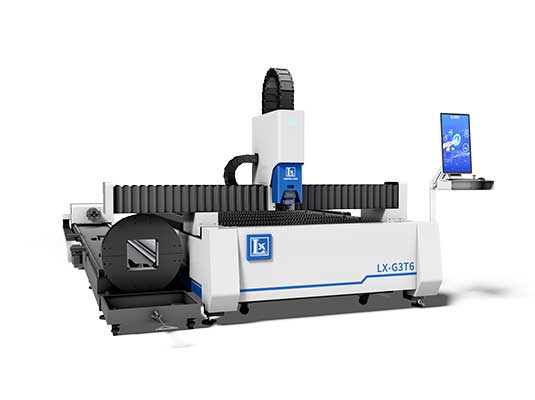
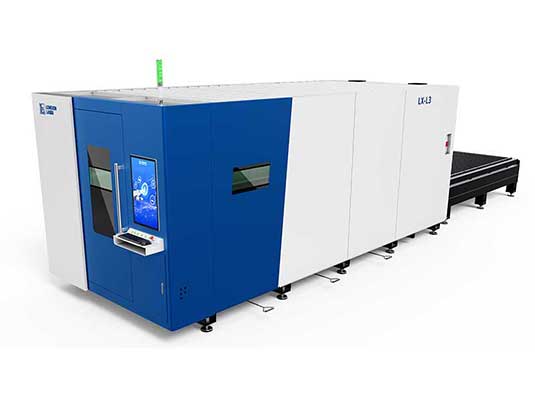
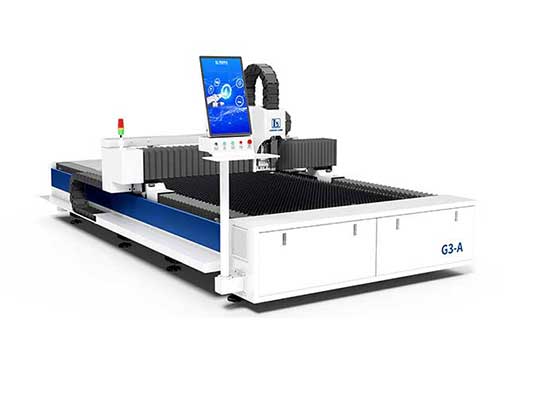
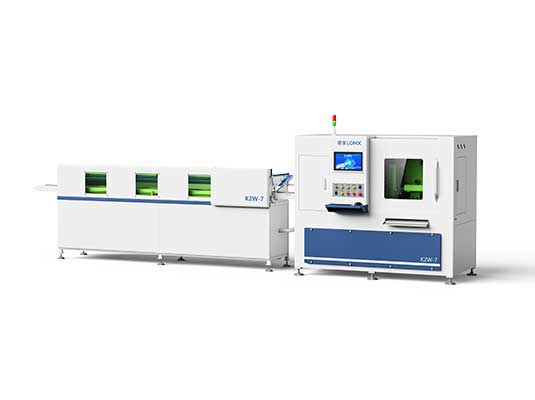
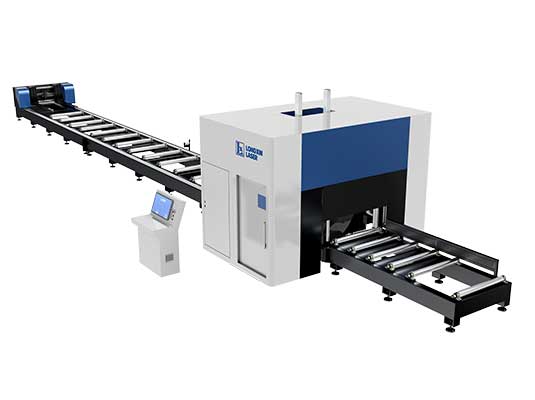
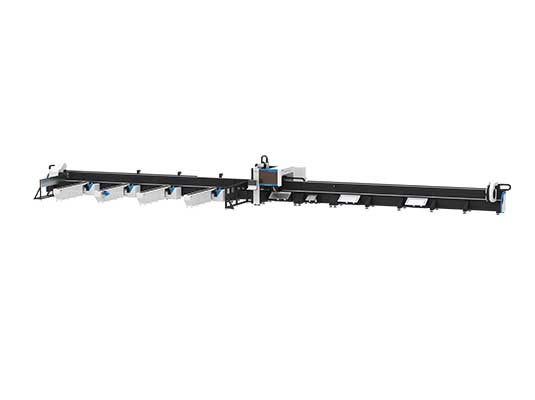
Fibre laser cutting machines are built in two primary mechanical architectures depending on the raw material geometry:
| Feature / Metric | Flat-Sheet Fibre Laser Cutter | CNC Fibre Laser Tube Cutter |
| Material Processed | Flat plates, stamped blanks, metal panels | Round/square tubes, rectangular boxes, open profiles |
| Motion Architecture | Planar 2D (X/Y) with Z height control | Synchronized linear feed (X/Y/Z) and rotary chucks (C-axis) |
| Key Profiles Handled | Standard sheets (3000x1500 mm, 4000x2000 mm) | Tubes (OD 15–350 mm+), Angle Iron (L), Channels (U/C), Beams (H) |
| Key Efficiency Options | Dual pallet exchange shuttle tables | Automatic bundle feeding, 3-chuck zero-tailing systems |
| Typical Applications | Enclosures, brackets, architectural panels | Fitness equipment, furniture, vehicle frames, pipelines |
Investing in an industrial CNC fibre laser cutting machine provides clear manufacturing advantages over mechanical saws, punching presses, and legacy thermal cutters:
Micron-Level Precision: Delivers repeatable positioning tolerances within ±0.03 mm to ±0.05 mm, eliminating downstream fit-up errors.
Zero Tool Wear: Because light does the cutting, there are no physical blades to dull, punch dies to sharpen, or costly re-tooling downtime between production runs.
High Energy Efficiency: Operates at electrical wall-plug efficiencies of 35% to 45% (compared to roughly 8% to 10% for CO2 lasers), substantially reducing monthly electricity expenses.
Process Consolidation: In tubular fabrication, a single fibre tube laser replaces sawing, drilling, punching, and deburring in one continuous automated setup.
Broad Material Compatibility: Readily cuts highly reflective non-ferrous alloys—such as brass, copper, and polished aluminum—without risk of optical back-reflection damage.
Fibre laser cutting machinery serves a broad spectrum of commercial and industrial sectors:
Agricultural & Heavy Machinery: Tractor cabins, combine harvester chassis, sprayer booms, and implement brackets.
Automotive & Transportation: Tubular exhaust manifolds, chassis roll cages, seat frames, and electric vehicle battery trays.
Fitness & Sports Equipment: Pin adjustment columns, selectorized weight racks, and gym bench frames.
Architectural Metalwork & Infrastructure: Handrails, security fencing, facade brackets, and structural truss connections.
Electrical Cabinets & HVAC: Server racks, power distribution enclosures, and custom sheet metal ducting.
When evaluating a fibre laser cutting machine for your workshop, align your investment with four primary engineering parameters:
Laser Power (Wattage):
1.5 kW to 3 kW: Optimum speed and cost-efficiency for sheet and tube wall thicknesses up to 6 mm.
4 kW to 6 kW: The industry standard for medium-heavy metal fabrication up to 12 mm carbon steel, stainless steel, and aluminum.
12 kW to 30 kW+: High-speed production piercing for heavy plate (16 mm to 50 mm) and thick structural beams.
Workpiece Geometry:
Choose a flatbed cutter with an automatic shuttle table for flat sheet fabrication.
Choose a dedicated multi-chuck CNC tube laser with zero-tailing clamping for pipe and profile processing.
Machine Frame Rigidity:
Select a heavy-duty, stress-relieved welded steel plate bed. High-speed accelerations (1.0G to 1.5G) require rigid vibration damping to maintain cutting precision over years of high-volume operation.
Automation Level:
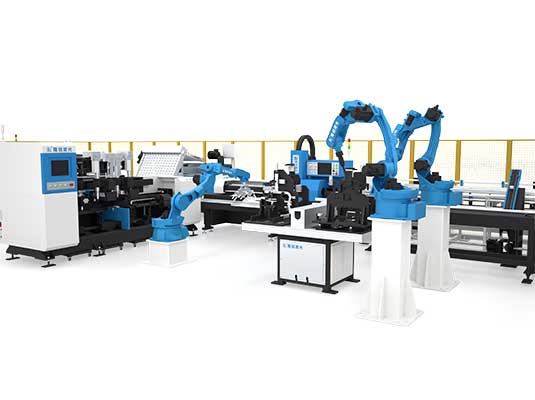
Add semi-automatic or fully automated sheet loading towers and tube bundle feeders to maximize continuous throughput and reduce manual labor overhead.
Investing in a fibre laser cutting machine is a proven way to eliminate outsourcing markups, shorten delivery lead times, and expand your fabrication capabilities.
As an experienced manufacturer of industrial CNC fibre laser equipment, we design and produce high-precision flat-sheet cutting tables, specialized multi-chuck tube lasers, and automated bundle-loading systems built to international standards.
Contact Lonxlaser sales engineering team today to discuss your workpiece specifications, request free sample test cuts on your drawing files, or receive a formal machine layout and factory quotation.