In precision manufacturing, metal fabrication, and rapid prototyping, laser cutting technology has become the cornerstone of high-efficiency production. From tiny medical implants to heavy structural steel beams, laser cutting machines have largely superseded mechanical saws, stamping presses, and plasma torches.
Whether you are an engineer optimizing workshop workflow or a business owner evaluating machine investments, this complete guide breaks down what a laser cutting machine is, how it works, the primary laser types, common applications, and how to choose the right system for your factory.
A laser cutting machine is an advanced CNC (Computer Numerical Control) industrial manufacturing tool that uses a concentrated, high-power laser beam to cut, pierce, slot, or engrave materials with extreme accuracy.
The word LASER stands for Light Amplification by Stimulated Emission of Radiation.
By focusing this amplified optical radiation through a precision optical cutting head onto a microscopic focal point (often 0.05 mm to 0.15 mm in diameter), the machine generates immense thermal energy density. This intense heat instantly melts, burns, or vaporizes the target material, while an assist gas stream blows the molten dross away, producing a clean, smooth, burr-free edge.
A modern CNC laser cutting machine operates through a coordinated sequence of optical physics, mechanical motion, and digital controls:
CAD/CAM Programming: An operator imports a 2D or 3D technical drawing (DXF, DWG, or STEP format) into nesting software, which calculates the optimal toolpath and converts geometry into CNC machine language (G-code).
Beam Generation & Delivery: The laser source produces a high-energy optical beam, which travels through sealed fiber-optic cables (in fiber lasers) or external optic mirrors (in CO2 lasers) straight to the cutting head.
Optics & Focal Positioning: Inside the laser head, collimating and focusing lenses compress the beam into a micro-spot. An integrated capacitive height sensor dynamically adjusts the nozzle distance to maintain perfect focus, compensating for any waviness on the metal sheet or tube surface.
Thermal Fusion & Slag Ejection: As the focused beam pierces the workpiece, an assist gas is blown coaxially through the cutting nozzle:
Nitrogen (N2): Acts as an inert shielding gas that blows molten metal away without oxidation, leaving shiny, weld-ready edges on stainless steel, aluminum, and brass.
Oxygen (O2): Used primarily for thick carbon steel; it creates an exothermic chemical reaction that adds thermal heat to speed up the cut.
Compressed Air: A cost-effective alternative for thin sheets and galvanized metal.
Precision CNC Gantry Motion: Servo motors and high-precision rack-and-pinion systems guide the cutting head across linear axes (X, Y, Z) and rotational chuck axes (for tube lasers) at cutting speeds often exceeding 60 to 100 meters per minute.
Industrial laser cutters are generally categorized by the active medium used to generate the laser beam:
| Laser Type | Wavelength | Best Suited Materials | Major Industry Strengths |
| Fiber Laser | ~1,064 nm | Carbon steel, stainless steel, aluminum, brass, copper | Maximum electrical efficiency (up to 40%), ultra-fast thin/medium metal cutting, virtually zero optic maintenance |
| CO2 Laser | ~10,600 nm | Acrylic, wood, leather, fabrics, glass, paper, non-metals | Clean, polished edges on acrylics and organic materials; legacy sheet metal processing |
| Nd:YAG / Diode | ~1,064 nm / 450 nm | Micro-electronics, jewelry, thin foil, plastics | Precision micro-machining, marking, and hobby-scale crafting |
For commercial metal fabrication, fiber laser cutting machines represent over 80% of modern machine installations due to their unmatched speed, energy efficiency, and ability to cut reflective non-ferrous metals without damaging internal optics.
CNC fiber laser cutters are designed around two primary mechanical configurations based on raw material geometry:
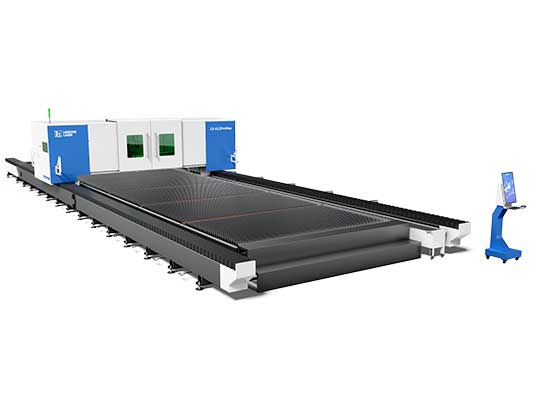
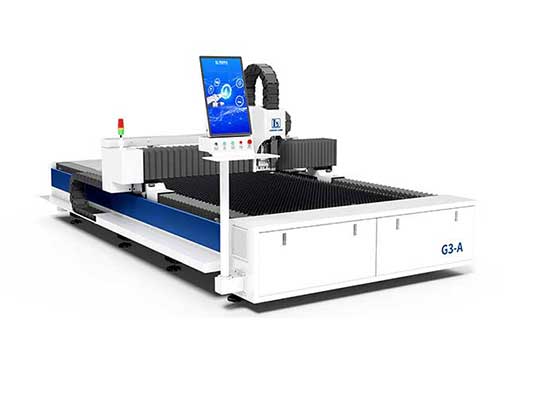
Architecture: Uses a stationary open or fully enclosed cutting bed (standard sheet sizes include 3000x1500 mm / 3015 format, 4000x2000 mm / 4020 format, and large-format ground rail beds).
Automation: Often equipped with dual exchange shuttle tables that swap raw sheets and finished parts in under 15 seconds to maintain continuous production.
Target Workpieces: Flat metal panels, machine brackets, electrical enclosures, baseplates, and architectural cladding.
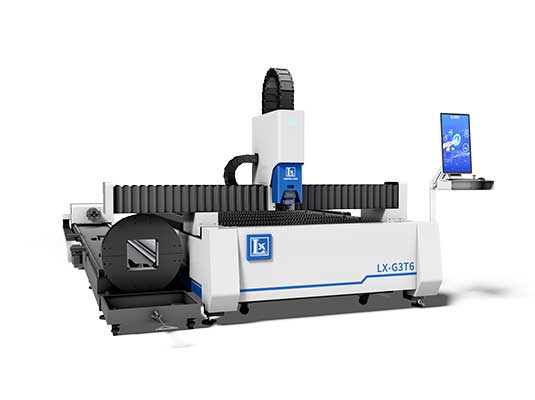
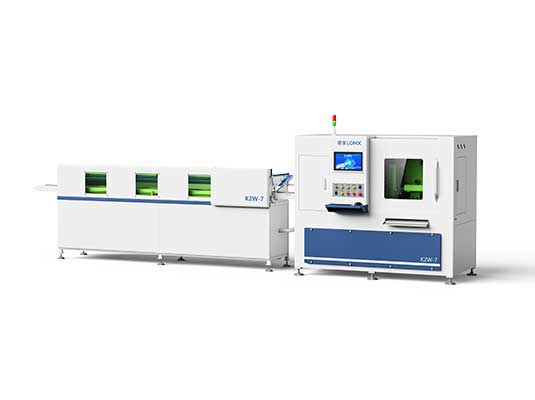
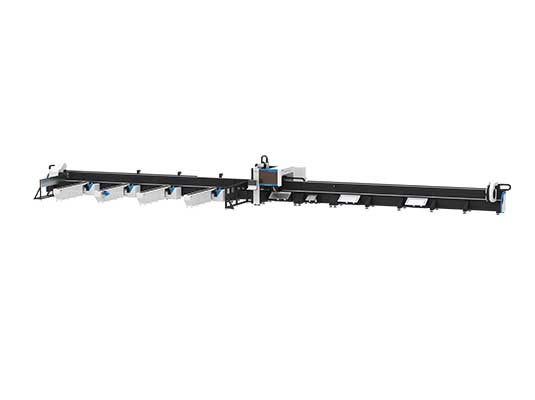
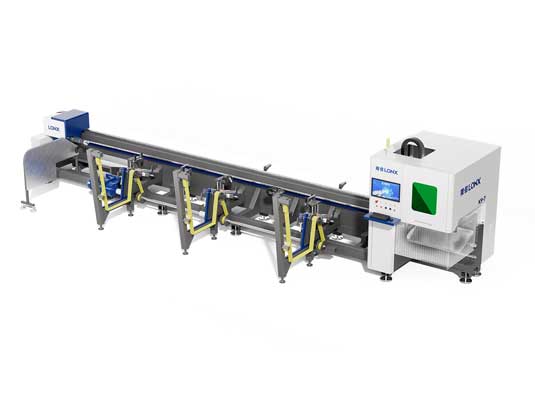
Architecture: Replaces flat beds with high-speed pneumatic/hydraulic rotary chucks and linear beds (standard pipe lengths of 6 m, 9 m, or 12 m).
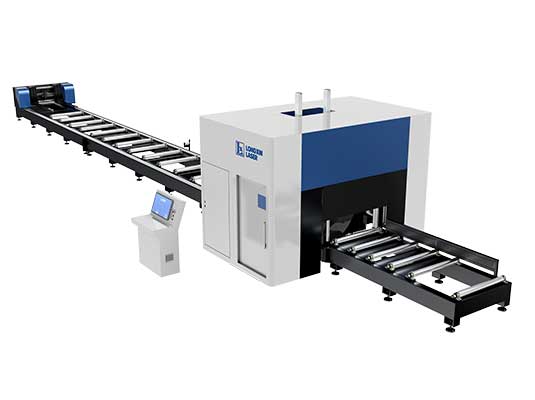
Profile Capabilities: Cuts round tubes, square/rectangular boxes, oval shapes, and open structural profiles such as Angle Iron (L), Channel Steel (U/C), and I-Beams (H).
Advanced Features: Multi-chuck zero-tailing clamping systems and 3D bevel cutting heads (up to ±45°) for one-step weld preparation.
Switching to industrial laser cutting delivers clear competitive advantages over mechanical sawing, milling, and punching:
Superior Edge Quality: Delivering positioning accuracy within ±0.03 mm to ±0.05 mm, parts require zero secondary grinding or deburring.
Non-Contact Processing: Because no physical blade or die contacts the metal, there is zero mechanical stress or physical deformation on thin-walled components.
Elimination of Tooling Costs: Switching between different part geometries requires only loading a new digital file—eliminating expensive custom die tooling, punch sharpening, and machine re-tooling downtime.
Complex Geometry Freedom: Micro-perforations, intricate decorative filigree, interlocking tabs, and saddle/fish-mouth joints can be cut in a single setup.
Maximized Material Yield: Advanced computer nesting software arranges diverse parts tightly across sheets and tubes, cutting scrap rates by up to 20% to 30%.
Selecting the ideal machine for your factory requires assessing four critical operational criteria:
Material Type and Thickness:
1.5 kW to 3 kW: Optimum speed and cost-efficiency for sheet/tube thicknesses from 1 mm to 6 mm.
4 kW to 6 kW: The sweet spot for medium-heavy fabrication (up to 12 mm carbon steel, stainless steel, and aluminum).
12 kW to 30 kW+: High-speed production piercing for heavy plate (16 mm to 50 mm+) and heavy structural tubing.
Workpiece Geometry (Sheet vs. Tube):
If your production is primarily flat paneling and brackets, choose a flatbed with an exchange table.
If you fabricate furniture, fitness equipment, pipelines, or structural frames, invest in a dedicated multi-chuck CNC tube laser.
Safety and Compliance Standards:
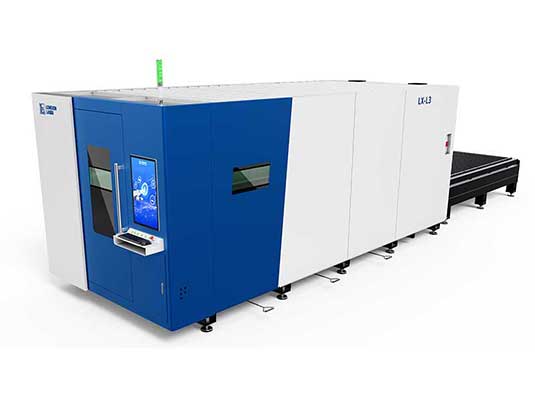
In regions like the European Union and North America, fully enclosed protective enclosures with certified CE/FDA laser safety interlock windows and high-efficiency dust collectors are essential for worker protection.
Automation Level:
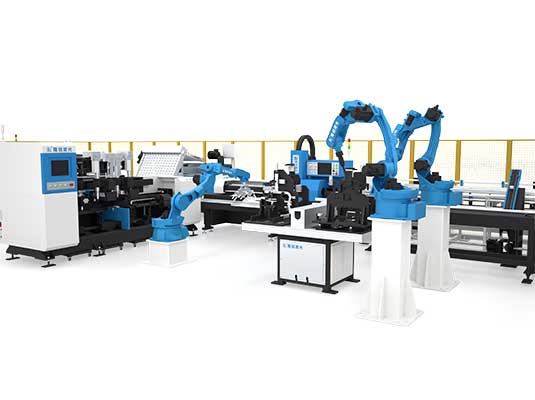
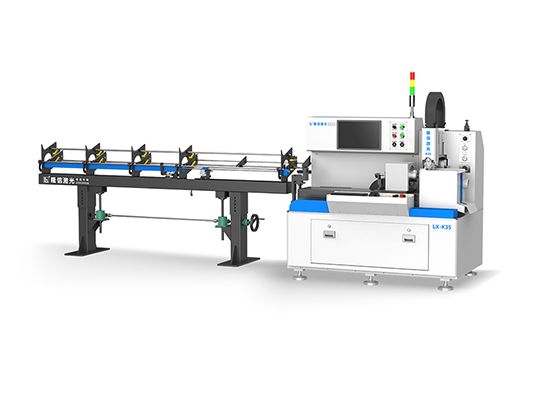
Consider semi-automatic or fully automated sheet loading towers and tube bundle feeders to run lights-out production and minimize labor overhead.
Investing in an industrial laser cutting machine is a proven way to eliminate outsourcing bottlenecks, reduce lead times, and expand your fabrication capabilities.
As a dedicated manufacturer of industrial CNC fiber laser systems, we design and produce a comprehensive range of high-precision sheet cutting tables, high-speed tube laser machines, and heavy-duty multi-chuck structural tube processing lines.
Contact Lonxlaser technical engineering team today to discuss your cutting specifications, request free sample test cuts, or receive a customized factory layout and quotation.